
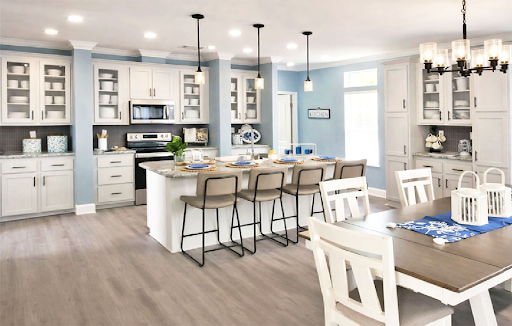
A well-designed home earns its keep in the small moments, how well the kitchen accommodates your workflow when dinner is underway, how comfortable the living room is when everyone settles in, and the way storage prevents clutter from taking over. With modular and manufactured homes, the way rooms flow together, the finishes you select, and the design details you choose all shape the home’s livability from morning coffee to winding down at night. Whether you’re drawn to sleek contemporary kitchens, flexible living spaces, or thoughtfully curated interiors, design and layout decisions will determine your home’s ambience.
At Jacobsen Homes, customization is built into the process. From modular home styles to manufactured home interiors, the focus is on helping buyers make design choices that feel support your ideal home vision. Below, we’ll explore how interior design and layout work together, which upgrade opportunities deliver the most impact, and how you can shape a home that is both beautiful and practical.
How Layout and Flow Shape Modular and Manufactured Home Interiors
An open floor plan can make a smaller footprint feel more expansive, while defined zones support privacy and separate functions when needed. This balance between openness and definition is especially important in modular and manufactured homes, where flexibility in design helps tailor the home to your lifestyle. Here are key layout principles to consider:
1. Transition and Flow:
A purposeful traffic path between entryways, kitchens, and communal spaces reduces friction, makes hosting easier, and prevents congestion in your daily routines.
2. Functional Adjacency:
Placing the kitchen near a dining area and ensuring bathrooms are accessible from both living and bedroom spaces helps reduce unnecessary circulation space.
3. Natural Light and Sightlines:
Orienting living areas and windows to maximize light creates a sense of openness and supports healthier living environments.
Jacobsen Homes offers a variety of floor plan options that reflect these principles across manufactured and modular offerings. You can explore all the available configurations to see how different layouts may fit your needs.
Kitchen Layouts and Interior Design Options for Modular and Manufactured Homes
If there’s one space in the home where interior design really shows its value, it’s the kitchen. Kitchens are both functional and social spaces, and thoughtful choices here can elevate the entire home.
Layout Options to Consider
- Galley kitchens work well in efficient single-wide or compact modular designs, keeping storage and prep space together.
- L-shaped kitchens open up sightlines to living areas, ideal for entertaining.
- Islands provide surface area for prepping food, casual dining, or homework stations.
In modular and manufactured configurations, appliance placement should also be considered. The easiest way to ensure larger appliances integrate into your home’s layout is by prioritizing built-in appliances that blend seamlessly with cabinetry and creating zones for workflow that minimize wasted steps.
Flooring and Finish Choices That Balance Style and Durability
Flooring is more than a base beneath your feet; it impacts the home’s look, feel, and maintenance requirements. In Florida’s climate, choices that handle humidity and high traffic can help protect your interior from daily wear and tear.
When considering flooring options:
- Luxury Vinyl Plank (LVP): Offers water resistance and easy care while mimicking wood grain.
- Tile Flooring: Define entry and kitchen areas with a cool feel underfoot.
- Carpet Options: Bring softness to bedrooms without compromising longevity when chosen for appropriate family settings.
Curating finish selections can balance practicality with aesthetic appeal, helping you choose a style that supports everyday life and long-term satisfaction.
Customization Options That Define Modular and Manufactured Home Styles
When you work with Jacobsen Homes, regardless if it is a modular home or a manufactured home, the key advantage is choice. Rather than a one-size-fits-all floor plan, you can refine the layout and interior features based on how you plan to live, entertain, work, and relax.
Some customization highlights include:
- Open shelving or cabinetry styles that showcase favorite dishes or keep essentials organized
- Lighting packages that layer task, accent, and ambient light
- Trim and molding options that unify rooms or elevate designs
Jacobsen’s Design Center is structured to help you work through these kinds of choices logically, understanding how each decision affects flow, light, and space perception, rather than simply picking finishes at random.
Bedroom and Bathroom Interior Design That Balances Comfort With Function
Bedrooms and bathrooms are personal spaces, and interior design here should focus on peace, privacy, and smart storage.
Bedroom Layout Tips:
- Keep traffic paths clear of furniture
- Allow space for wardrobes or walk-in closets when possible
- Ensure window placement supports natural light without glare
Bathroom Design Priorities:
- Vanity storage that keeps countertops clutter-free
- Efficient shower layouts that balance accessibility with comfort
These are small choices that make a big difference in the day-to-day feel of a home. When bedrooms and bathrooms are intentionally designed, they contribute to a sense of rhythm rather than interrupting it.
Designing Open Living Areas in Modular Homes
Not every home needs rooms separated by doors. In fact, many modern modular home interiors embrace space definition through design elements rather than walls, especially in single-level living. When those elements are chosen with intention, open layouts feel organized and comfortable instead of undefined.
One effective approach is to create “zones” through scale and placement, anchoring the living area around a focal point such as a media wall or a centered window, then defining the dining space to sit naturally nearby without competing for attention. Lighting choices and even the direction your furniture faces can reinforce those boundaries in a way that creates natural zone distinctions.
Transitions matter just as much as the main living areas. Entry points benefit from a clear landing space so shoes, bags, and everyday items have a home, and walkways should stay visually open so the space is uncrowded and inviting. When living zones and transitions are planned together, the home creates a cohesive whole, and each area feels like it belongs.
Interior Design Choices That Support Long-Term Resale Appeal
Design decisions don’t just serve you today, they affect how future buyers perceive your home if you choose to sell or reposition it later. While personal style is important, features that enhance practicality and timelessness will have broader appeal.
Here are common design choices that support lasting value:
- Neutral color palettes that allow personalization with accessories
- Durable materials in high-traffic zones
- Flexible spaces that can serve multiple functions
This balance between personal flair and market appeal is part of what custom modular and manufactured homes bring to the table, design flexibility without sacrificing long-term relevance.
Planning Interior Layouts for Changing Needs Over Time
Interior design should be designed to evolve with your needs. A home that fits a couple may need different planning when family grows or when aging in place becomes a priority. Good design anticipates shifting needs by incorporating:
- Wider pathways for mobility
- Accessible bathroom design options
- Transition spaces that prevent congestion
These considerations become increasingly valuable over time and are easier to incorporate during the build process than retrofitted later. Jacobsen’s approach to planning and design encourages thinking beyond the moment, helping you consider not just what you’ll love now, but what will work best over time.
Bringing Layout and Interior Design Together in Modular and Manufactured Homes
Modular home interior design and manufactured home interiors are strongest when layout, function, and finishes are considered as a cohesive system rather than isolated choices. Thoughtfully designed interiors support everyday routines, create welcoming environments, and make the home effortless to live in.
Whether your priority is a chef-style kitchen, flexible living zones, or bedrooms that balance peace with practicality, the upgrade choices you make today shape how you’ll enjoy your home tomorrow.
Explore Interior Design and Layout Options for Your Modular or Manufactured Home
If you are exploring modular home styles, comparing interior options, or want help turning design ideas into a cohesive plan, Jacobsen Homes is here to help. Our team works with you through the design process, providing guidance that supports both your lifestyle and long-term satisfaction.
Contact the Jacobsen Homes Team to learn about floor plans, interior design options, and upgrade possibilities that bring your vision to life.